Quick Answer
Kilimanjaro is higher, longer and more expensive. Mount Meru is shorter, steeper and cheaper. For most first-time trekkers, Meru is an excellent warm-up for Kilimanjaro — but it is not “easy Kilimanjaro”. The right choice depends on your fitness, budget, time and goals.
This guide compares both mountains honestly — altitude, difficulty, duration, scenery, cost and who should choose which. By the end, you will know which mountain suits you best, and whether doing both in one trip makes sense.
Altitude: Kilimanjaro Is Higher
Kilimanjaro stands at 5,895 metres (19,341 feet), while Mount Meru reaches 4,566 metres (14,980 feet). This difference of more than 1,300 metres matters a lot when it comes to altitude sickness and acclimatisation.
At Kilimanjaro’s summit, the air contains roughly half the oxygen available at sea level. This is why altitude — not fitness — is the main challenge on Kilimanjaro. Even very fit people can struggle with altitude sickness.
Meru is lower, which means the altitude is more manageable. However, it is still high enough to cause altitude sickness if you ascend too quickly. The good news is that Meru’s shorter duration and more gradual profile make it a useful introduction to high-altitude trekking. [662][665][666]
Duration: Meru Is Shorter
Mount Meru is typically climbed in 3–4 days, while Kilimanjaro usually takes 6–9 days depending on the route. This makes Meru a better option for travellers with limited time or budget.
Kilimanjaro’s longer duration is not just about walking more — it is about giving the body time to acclimatise. Routes like Lemosho (7–8 days) and Northern Circuit (8–9 days) have higher summit success rates because they build in more acclimatisation time. [662][665][670]
If you are short on time, Meru is easier to fit into a Tanzania trip. If you have a week or more, Kilimanjaro gives you a deeper, more immersive mountain experience.
Difficulty: Meru Is Steeper, Kilimanjaro Is Higher
This is where the comparison becomes interesting. Many people assume Kilimanjaro is harder because it is higher — but that is only part of the story.
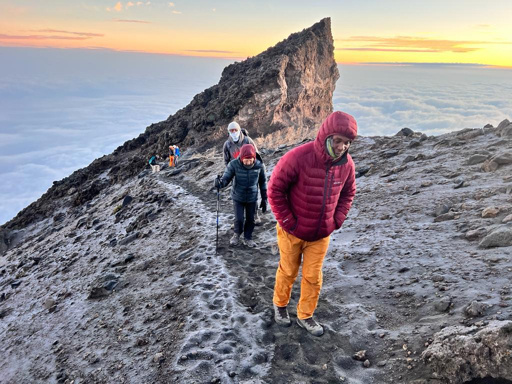
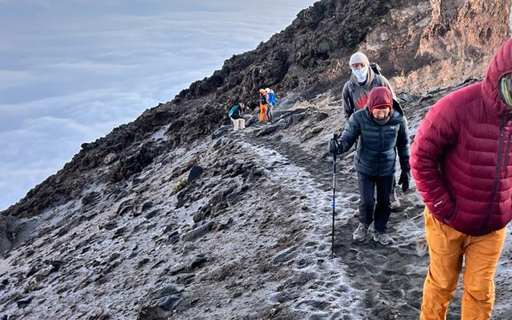
Meru is steeper, narrower and more exposed near the summit, with a dramatic ridge walk that requires focus and a head for heights. Kilimanjaro is less technical, but the altitude, cold and long summit night make it a serious physical and mental challenge. [663][664][669]
In simple terms:
- Meru = steeper, shorter, more exposed
- Kilimanjaro = higher, longer, more altitude-focused
Neither mountain is “easy”. Both require respect, preparation and a good operator.
Scenery: Two Very Different Experiences
Meru and Kilimanjaro offer completely different kinds of beauty.
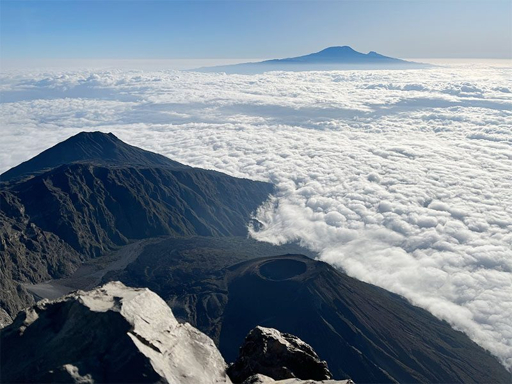
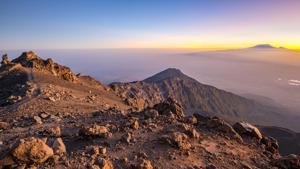
Meru takes you through lush rainforest, past wildlife, and up a dramatic volcanic ridge with views into the ash cone. On clear mornings, you can even see Kilimanjaro in the distance. It feels wild, intimate and raw.
Kilimanjaro offers vast, open landscapes — endless plains, moorland, alpine desert and glaciers. The summit sunrise from Uhuru Peak is one of the most famous views in Africa.
If you want wildlife and a dramatic ridge, choose Meru. If you want vast open spaces and a legendary summit, choose Kilimanjaro.
Cost: Meru Is Cheaper
Mount Meru is usually 30–40% cheaper than Kilimanjaro. This is because it is shorter, requires fewer days of logistics, and uses huts instead of full tent crews. [668][672][675]
Kilimanjaro costs more because of higher park fees, longer itineraries and the need for a larger crew (guides, porters, cooks). However, Kilimanjaro also offers a bigger, more famous achievement — standing on the “Roof of Africa”.
If budget is your main concern, Meru is the smarter choice. If summiting Africa’s highest peak is your dream, Kilimanjaro is worth the extra cost.
Which Should You Choose?
Choose Meru if you:
- Are a first-time trekker
- Have limited time or budget
- Want a beautiful, less crowded trek
- Want a warm-up before Kilimanjaro
- Enjoy wildlife and dramatic ridges
Choose Kilimanjaro if you:
- Want to summit Africa’s highest peak
- Have a week or more available
- Want a legendary, once-in-a-lifetime achievement
- Are prepared for altitude and a longer trek
Can You Do Both in One Trip?
Yes — and many trekkers do. The best approach is to climb Meru first, rest for 1–2 days, and then start Kilimanjaro. This gives your body time to recover while keeping the acclimatisation benefit.
A popular combination is:
- Day 1–4: Mount Meru trek
- Day 5: Rest and transfer
- Day 6–13: Kilimanjaro climb (7–8 days)
This combination is demanding but very rewarding, and it gives you the best possible chance of enjoying both mountains.
Frequently Asked Questions
Which is harder — Kilimanjaro or Meru?
Kilimanjaro is harder overall because of altitude and duration. Meru is steeper and more exposed in places.
Is Meru a good warm-up for Kilimanjaro?
Yes — it helps with acclimatisation, fitness and confidence.
How many days do I need for Meru?
Most people do 3–4 days.
Which is cheaper?
Meru is usually 30–40% cheaper than Kilimanjaro.
Can I see Kilimanjaro from Meru?
Yes — on clear mornings, Kilimanjaro is visible from Meru’s upper slopes.
Which is better for a first-time trekker?
Meru is often better for a first-time trekker because it is shorter and cheaper, while still offering a real mountain experience.