Quick Answer
Summit night on Kilimanjaro usually starts around midnight and ends with you reaching Uhuru Peak (5,895 m) at sunrise. It is the hardest and most memorable part of the entire climb — long, cold, dark and physically demanding, but also the moment you have been preparing for.
This guide explains exactly what happens during summit night, how cold it gets, what to wear, how to prepare, and the most common mistakes climbers make. By the end, you will know exactly what to expect and how to give yourself the best chance of reaching the summit.
What Is Summit Night?
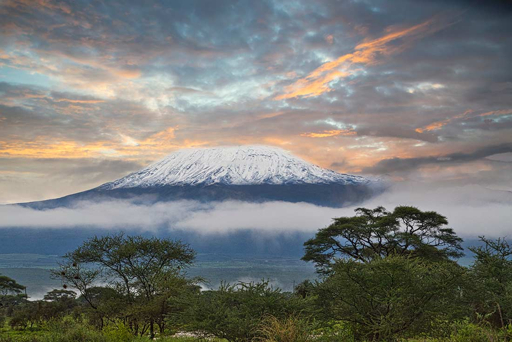
Summit night is the final push from your last camp (usually Barafu, Kosovo or School Hut) to Uhuru Peak, the highest point of Mount Kilimanjaro at 5,895 metres. It is called “summit night” because you start climbing in the middle of the night, in darkness and freezing temperatures, and reach the summit just as the sun rises.
The reason for starting at night is simple: it allows you to reach the summit at sunrise, which is safer (you avoid the heat of the day) and more rewarding (you get to watch the sunrise from the highest point in Africa).
Summit Night Timeline: Hour by Hour
23:00–00:00 — Wake Up and Prepare
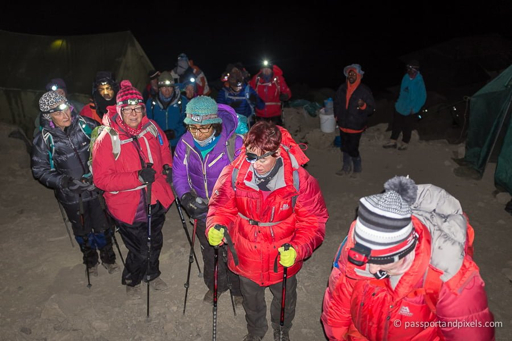
Your guide will wake you around 11 pm or midnight. You will dress in multiple warm layers, eat a light breakfast (usually biscuits, tea and porridge), and fill your water bottles. This is also the time to check your headtorch, batteries and snacks.
00:00–01:00 — Start Climbing
You leave camp in darkness, walking slowly with your headtorch lighting the way. The first few hours are usually the hardest mentally — it is dark, cold and your body is still adjusting to the altitude.
01:00–05:00 — The Long Ascent
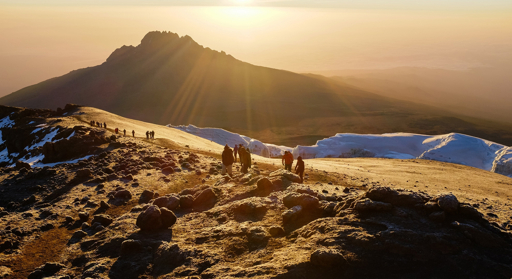
This is the longest and most demanding part of summit night. You will walk slowly, steadily and quietly, taking small steps and pausing regularly to catch your breath. The trail becomes steeper as you get closer to Stella Point.
05:00–06:00 — Reach Stella Point
Stella Point (5,756 m) is the emotional halfway point of summit night. From here, you can see the sunrise beginning to light up the sky, and you know you are close to the summit.
06:00–07:00 — Reach Uhuru Peak at Sunrise
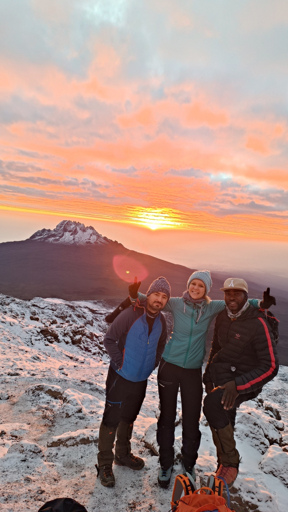
The final hour from Stella Point to Uhuru Peak is slow but unforgettable. You will walk along the crater rim, with the sun rising over the plains below, and finally reach Uhuru Peak (5,895 m) — the highest point in Africa.
07:00–12:00 — Descend to Mweka Camp
After photos and a short celebration at the summit, you will begin the long descent to Mweka Camp (or Millennium Camp, depending on your route). This is a long day, but the hardest part is already behind you.
How Cold Does It Get on Summit Night?
Summit night is cold — very cold. Temperatures can drop to -10°C to -20°C (14°F to -4°F) or lower, especially near Stella Point and Uhuru Peak. Wind chill can make it feel even colder.
This is why layering is so important. You will need:
- Moisture-wicking base layers
- Insulating fleece or down jacket
- Waterproof and windproof shell jacket
- Thermal leggings and trekking trousers
- Warm hat, gloves and buff
- Warm socks and waterproof boots
How to Prepare for Summit Night
1. Dress in Layers
The key to staying warm is layering. Start with a moisture-wicking base layer, add an insulating fleece or down jacket, and finish with a waterproof and windproof shell. This allows you to adjust as your body temperature changes.
2. Keep a Headtorch with Spare Batteries
You will be walking in the dark for several hours. A good headtorch with spare batteries is essential — do not rely on your phone torch.
3. Drink Water and Eat Snacks
It is easy to forget to drink and eat during summit night, but your body needs fuel. Carry water and high-energy snacks (nuts, chocolate, energy bars) and take small sips and bites regularly.
4. Walk Slowly — “Pole Pole”
The most important rule on summit night is to walk slowly. The altitude makes every step harder, and rushing will only make you more tired and more likely to develop altitude sickness.
5. Tell Your Guide if You Feel Unwell
If you develop a severe headache, nausea, dizziness or extreme fatigue, tell your guide immediately. Do not try to push through serious altitude sickness symptoms.
Common Mistakes to Avoid
1. Not Wearing Enough Layers
Many climbers underestimate how cold it gets. Always bring more layers than you think you need.
2. Forgetting Spare Batteries
Your headtorch is your lifeline on summit night. Always carry spare batteries.
3. Walking Too Fast
Going too fast at altitude is a common mistake. Walk slowly and steadily — “pole pole”.
4. Not Drinking Enough Water
Dehydration makes altitude sickness worse. Keep sipping water throughout the night.
What Happens After the Summit?
After reaching Uhuru Peak, you will spend a short time at the summit for photos and celebration, then begin the long descent to Mweka Camp (or Millennium Camp). The descent is long — usually 5–7 hours — but it is much easier on the body because you are going down, not up.
Most climbers reach Mweka Camp by early afternoon, where they rest, eat and celebrate. The next day is a short walk to the park gate, where you will receive your summit certificate.
Frequently Asked Questions
What time do you start summit night?
Usually around midnight, sometimes 11 pm depending on the route and operator.
How long does summit night last?
About 6–8 hours to reach the summit, plus 5–7 hours to descend to Mweka Camp.
How cold does it get?
It can drop to -10°C to -20°C or lower, especially near Stella Point and Uhuru Peak.
Do I need a headtorch?
Yes — you will be walking in the dark for several hours. Always carry spare batteries.
Can I turn back during summit night?
Yes — if you feel seriously unwell, your guide will help you descend safely. Summiting is important, but your safety comes first.
What should I eat during summit night?
High-energy snacks like nuts, chocolate, energy bars and biscuits. Keep eating small amounts regularly.
Is summit night scary?
It is challenging, but with a good operator, proper preparation and a steady pace, it is a safe and unforgettable experience.
What happens if I don’t reach the summit?
Not everyone reaches the summit, and that is okay. Your safety comes first, and many climbers try again in the future.