Quick Answer
Packing for Kilimanjaro is about preparing for four climates in one trek — rainforest, moorland, alpine desert and glacial summit. You will need warm layers, waterproof gear, a four-season sleeping bag and a good headtorch.
This guide gives you a complete, practical checklist — organised by category — so you can pack with confidence and avoid the most common mistakes.
Why Packing Matters on Kilimanjaro
Kilimanjaro is unique because you experience several climates in a single trek. At the base, you may be walking in warm, humid rainforest. By the time you reach the summit, you could be facing freezing temperatures, strong winds and thin air.
Packing correctly is not about bringing “more” — it is about bringing the right things. Too much weight slows you down; too little leaves you cold, wet or uncomfortable. The goal is to be prepared for every condition without overpacking.
Clothing: The Layering System
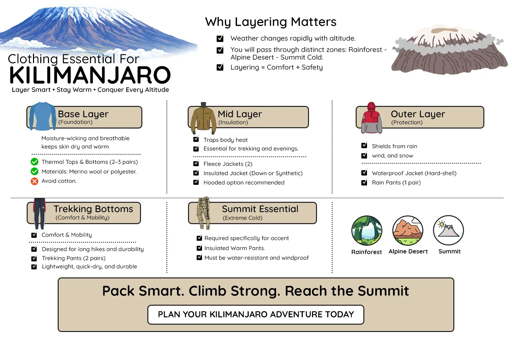
The secret to staying comfortable on Kilimanjaro is layering. Instead of one heavy jacket, you wear several lighter layers that you can add or remove as conditions change.
Base Layers
These sit next to your skin and should wick moisture away from your body. Avoid cotton — it holds sweat and makes you cold.
- 2–3 moisture-wicking long-sleeve tops
- 2–3 moisture-wicking t-shirts
- Thermal leggings for cold nights
- Underwear and sports bras (enough for each day)
Mid Layers
These provide warmth. You will need at least two insulating layers for the colder parts of the trek.
- 1–2 fleece jackets or softshells
- 1 down jacket (essential for summit night)
- 1 warm jumper or light insulated jacket
Outer Layers
These protect you from wind, rain and snow.
- Waterproof and windproof shell jacket
- Waterproof trousers
- Lightweight rain poncho (optional but useful)
Trekking Trousers and Shorts
- 2–3 pairs of quick-dry trekking trousers
- 1–2 pairs of shorts for the lower, warmer sections
- Thermal leggings for summit night
Headwear and Gloves
- Warm hat (beanie)
- Sun hat or cap
- Buff or neck gaiter
- Warm gloves (essential for summit night)
- Lightweight gloves for lower sections
Footwear
Your boots are one of the most important items on the trek. They must be comfortable, waterproof and already broken in before you arrive.
- Waterproof hiking boots (broken in before the trek)
- Trekking socks (4–5 pairs, moisture-wicking)
- Warm socks for summit night
- Comfortable camp shoes or sandals
- Gaiters (optional but useful in wet conditions)
Sleeping Gear
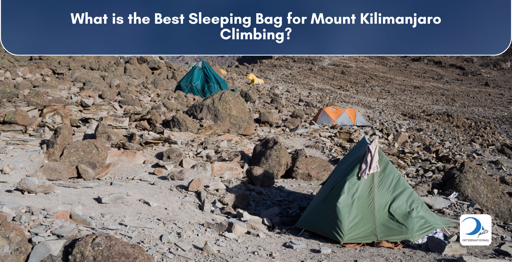
Nights on Kilimanjaro can be very cold, especially at higher camps. A good sleeping bag is essential.
- Four-season sleeping bag (rated to at least -10°C)
- Sleeping bag liner (adds warmth and keeps the bag clean)
- Inflatable sleeping mat (if not provided)
Backpack and Duffel Bag
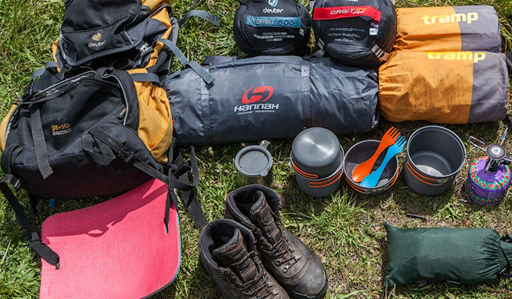
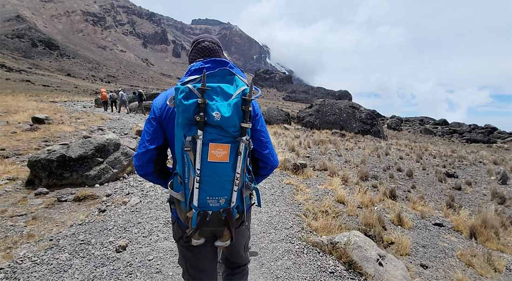
You will need two bags: a daypack for items you carry during the day, and a duffel bag for the rest of your gear (carried by porters).
- Daypack (20–30 litres)
- Waterproof cover for daypack
- Duffel bag (60–90 litres, carried by porters)
- Small padlock for duffel bag
Hygiene and First Aid
Staying clean and healthy is important on a multi-day trek.
- Toothbrush and toothpaste
- Biodegradable wet wipes
- Hand sanitiser
- Toilet paper
- Quick-dry towel
- Personal medication
- Basic first aid kit (plasters, painkillers, blister treatment)
- Water purification tablets or filter
Electronics and Documents
- Headtorch with spare batteries
- Camera and spare batteries
- Power bank
- Travel adapter (Tanzania uses Type D and G plugs)
- Passport and visa
- Travel insurance details
- Cash (small denominations for tips)
What NOT to Bring
Less is more on Kilimanjaro. Avoid bringing items that will only add weight and slow you down.
- Too many books or heavy reading material
- Excessive clothing (you will not wear everything)
- Valuables you do not need
- Heavy toiletries
- More than one pair of heavy boots
Route-Specific Packing Notes
Your packing list may change slightly depending on the route you choose.
- Marangu: You will sleep in huts, so a lighter sleeping bag may be enough.
- Lemosho, Machame, Rongai, Northern Circuit: You will sleep in tents, so a four-season sleeping bag is essential.
- Umbwe: Similar to other camping routes, but expect colder and more exposed conditions.
Season-Specific Packing Notes
- June–October (dry season): Lighter rain gear, but still bring warm layers for nights.
- December–February (dry season): Similar to June–October, but slightly warmer.
- March–May (long rains): Heavier rain gear, waterproof boots and extra socks.
- November (short rains): Lighter rain gear, but still be prepared for wet conditions.
Frequently Asked Questions
Do I need a four-season sleeping bag?
Yes. Summit nights are cold, and a good sleeping bag makes a big difference. [690][693]
Can I rent gear locally?
Some items can be rented locally, but boots and personal layers are best brought from home.
How heavy should my daypack be?
Aim for 5–7 kg — enough for water, snacks, rain gear, camera and warm layer.
Do I need trekking poles?
They are not essential, but they help with balance and reduce strain on your knees, especially during the descent.
What should I wear on summit night?
Multiple warm layers, a warm hat, gloves, thermal leggings and a waterproof shell.
Can I charge my phone on the mountain?
Some camps have charging facilities, but a power bank is essential.
Do I need a water filter?
Yes — water purification tablets or a filter are recommended.
How much should my duffel bag weigh?
Aim for 12–15 kg — porters will carry it, but there are weight limits.